EXHIBITIONS 2024
OFF THE GRID: Creative paths of giving up
Artist and workshop leader: Kruno Jošt
March 12th - April 2nd 2024

Workshop participants: Marina Baletić, Toni Bušić, Vida Grujin, Martina Freyja Kartelo, Nika Kostović, Bianka Marković, Luka Matijaš, Olena Pidleteychuk, Marcela Sunara, Aleksandar Tiške, Stanislav Trofimchuk, Klara Višnjić, Daja Vušković, Josip Žuvela The exhibition is the result of an intensive five-day workshop held in Prostor by Kruno Jošt, an artist who in his practice creatively combines the concepts of permaculture and self-sustainability with the art of "giving up" on the aspirations of today's civilization, without indulging in excessive romanticization. The process in Prostor began with a lecture on Friday, March 8, in which the artist presented the principles of the "off the grid" lifestyle and the philosophy behind it, along with a brief overview of the permaculture design guidelines, as well as an insight into the his personal artistic practices and transdisciplinary use of creative methods to go "off the grid" in multiple fields. The practical part of the workshop gathered a total of fourteen male and female participants who worked together on building a model of a self-sustainable house, starting from ideation and sketching all the way to realisation in the form of a model. The practical part of the workshop began on Saturday, March 9, with work in groups creating permaculture zones of imaginary or already existing lands, paying special attention to the favourable and unfavourable conditions of the terrain itself, such as, for example, prevailing winds that can harm plant growth, insolation of the terrain, as well as the slope of the terrain due to the possible avoidance of rainwater accumulation or rainwater collection. In addition, the workshop formed groups that researched various technologies that can be applied to an "off the grid" permaculture property, such as solar panels and wind turbines, research into soil quality, microclimate, indigenous treasures etc. After the research, the participants worked on a joint, participatory collage, as well as on a model of a tiny house on wheels, which, along with all the working materials, is on display in front of you. ABOUT THE ARTIST: Through profound, locally anchored and transdisciplinary research methods, Kruno Jošt contemplates ecological contextuality with a fascination for entering extended spatial sequences and unexpected time spans. Migrating freely from one scale to another, he merges subjective perspectives into new collective movements and entanglements. In this way, he developed a unique artistic practice that deals with permaculture, living off the grid, sustainability and interaction between humans and non-humans in the field of contemporary art. With his extensive projects such as "Centre for Creative Solutions" (C4CS), "Ecocentric" and "SoundGarden", he consistently demonstrates a deep understanding and a well-considered position in the contemporary debate on art, environment and technology. Jošt's works have been exhibited both at the national level and abroad, such as "Sound Fertilizer" in BBD, Berlin, "Ecocentric" in RMZ Ecoworld, Bangalore India, "PTP" in the Museum of Modern and Contemporary Art, Rijeka, Croatia, "Playing to Microbes" in Sweden Halland region. More at: https://gentlejunk.net/ The exhibition and workshop are part of the "Deviations" program which "Culture Hub Croatia" Platform is implementing in 2024 as part of the creative hub Prostor. The program is co-financed by the Ministry of Culture and Media of the Republic of Croatia. The work of the Platform "Culture Hub Croatia" is supported by the National Foundation for the Development of Civil Society and Kultura nova Foundation.


Srđan Veljović: Eighties
April 5th - 29th 2024
The series of photographs entitled "Eighties" is dedicated to the problem of identity and the ways in which it is expressed over time in different political formations. The series of photographs was created between 1983 and 1985 in Block 45 in New Belgrade, the so-called "Sun Village", which was realized as a utopian, biopolitical project carried out at the time of the decline of Yugoslav socialism. That project can be considered utopian today, and it was defined by the scene of the young generation represented in these photos. At that time, conditions were created for a generation to grow up, which from today's perspective seems highly privileged. On one level, we can view these photos as a document of the growing up of one of the last carefree generations of the SFRY, especially in the light of the coming nineties. Interview with the artist (excerpt) Tena Starčević and Sandra Križić Roban Tena Starčević: You have been involved in photography since elementary school, and thanks to your father, you encountered the technical and technological aspects of the photographic medium very early on. To begin with, I'm wondering if you could describe your first encounters with photography? Srđan Veljović: I grew up in an environment where photography was very present. Actually, the eighties implied some technical and technological prerequisites, because photography was not as handy as it is today. My father was an architect, but he did a lot of photography, so I also had the experience of developing photos in the laboratory. We always had film rolls in the closet and all of that was within reach, but I think it's interesting that I really decided at one point to start doing photography. So it was a matter of decision. I kind of started the practice and probably liked it, so it just keeps rolling. TS: In that period, your first photographic series of the Eighties was created, documenting the construction of one of the last urban and architectural projects in Belgrade. The series of photographs was created between 1983 and 1985 in Block 45 in New Belgrade, the so-called "Sun Village", which was realized as a utopian, bio-political project carried out at the time of the decline of Yugoslav socialism. Is it a photographic series that was created as a result of a clear concept, or is it a very spontaneous act of photography? SV: By coincidence, these photos are really a document of the time of my beginnings. I say a combination of circumstances, because those motives were some of my immediate surroundings, since during that period I lived in Novi Beograd Block 45. I "only" photographed my company and this need arose quite naturally. However, it was only much later that I realized that I consciously decided to step out of the domain of the intimate with photography and to get involved in the circulation of images that started with the appearance of the press and some magazines that were important to me. I have to say that for a long time I was not at all attracted to the idea of exhibiting photos, but the very act of taking photos has always been a conscious decision. The work was certainly intuitive, and I used the camera to record and respond to some immediate stimuli from the environment. I think even photography served as a means of communication for me, maybe I wasn't aware of it at the time. It's really somewhat paradoxical that I only formulated the Eighties project in 2017. I look at it as a project from the archive, which is mine due to circumstances. It is so far from me now, it was taken by that certain man in the 1980s, and the fate of the pictures is such that we look at them in a different way today. Sandra Križić Roban: What you just mentioned is very interesting - that time lapse and actually observing yourself, that is, your own archive, which somehow stems from the practice of self-archiving. In order for a person to be able to observe himself at all, he must first be archived in some way. I find it intriguing that you describe yourself as a conceptual documentarian. I don't know if at the time when you were filming, in the mid-1980s, you saw yourself as a conceptual documentarian, but I'm interested in what of that conceptual trend could have captured you at that time? You were very young then, but then again, some things or even maybe the general spirit of the new photography may have reached you? SV: Now I have to clarify some things. So, of course, at that time I didn't even consider myself a photographer, let alone a conceptual documentarian. Actually, I was a boy who got a new toy and started playing with it. Conceptual documentary filmmaker is a designation that came about much later, and that's what my colleague and friend Milan Rakita actually called me. I took it on because I liked how the name referred to my subsequent work with the archive where the documentary is not delivered as a raw product. I take into account the time gap due to which the narrative from the archive and from that other time is presented in the present moment, while also including the time context through which we read the photographs. In the mid-1980s, I did not think about any concepts, but I often looked through the foreign and domestic press. I regularly looked at Stern and Start magazines, and let's just say they were sources of inspiration. In addition, in the second half of the 1980s, there was an exhibition of Robert Mapplethorpe in Belgrade, and it really encouraged me to think about photography, but also moved me away from the aesthetics of photo clubs with which I had some kind of experience. I must point out that I moved away from that aesthetic very quickly, but it still took some time to actually understand what I wanted to achieve with photography. So, in that sense, it doesn't even matter how and when the photographic material was created, but it is more important that you know how to present it in the time in which you decide to present it. Interventions on the photographic series from the archive and reception are more important to me than the actual production of photographs. SKR: Does this mean that with the passage of time, the emotional current, which is certainly evident in the way the Eighties series was filmed, was experienced in a different way? Do you show absolutely all the photos from that series or did you make some revisions? What is your view today compared to when they were recorded in the mid-1980s? SV: Of course these views are terribly different. Photography has this characteristic of infinitude, which refers to the fact that over time, the photographic image itself means completely different things. If we exclude the audience, for me as the author that photographic series becomes a very personal archive and it's simple - I'm changing, I'm getting older, and therefore the perspective from which I look at photos taken long ago also changes. I thought for a long time whether I should even revive that Eighties project, because I wanted to be sure that I would avoid a kind of sentimentality that I think would be good to avoid in author's projects. I think it's actually about that comparison - how I looked at those photos then and how I look at them today. And it is completely incomparable. At that time, photography was a toy to me and most of the time I made them just to share them with the friends who were featured in them. In this sense, the circulation of the photos took place in a very closed circle of actors, but that aspect is certainly interesting. Over time, almost every archive, or every piece of it, offers different possibilities for interpretation and reinterpretation. With the passage of time, the potential value and the number of references that you can subsequently load increase. I really often do projects from the archive, because it takes me a long time to figure out what I want to do with the recorded material. In the case of the Eighties photo series, the time gap is really extreme, because the photos were taken in my teenage phase, and today I am fifty-odd years old, so my position is completely different. ABOUT THE ARTIST: Srđan Veljović (1968) is a photographer, cultural worker, conceptual documentarian. He deals with the problem of identity and its establishment as a field constituted by the outside, exploring places of transgression of the border that defines it. His work was exhibited collectively and independently in Serbia, Macedonia, Croatia, Bosnia, Slovenia, Romania, Albania, Austria, Germany, United States of America. The exhibition is part of the program "Synergies" that the Platform "Culture Hub Croatia" is implementing in 2024 as part of the creative hub Prostor. The program is co-financed by the Ministry of Culture and Media of the Republic of Croatia. The work of the Platform "Culture Hub Croatia" is supported by the National Foundation for the Development of Civil Society and Kultura nova Foundation.


THE END AND THE BEGINNING
Objects, Processes, Trajectories.
May 15th - 24th 2024
“The end and the beginning. Objects, processes, trajectories” is an exhibition showcasing the results of the workshop of the same name conceived and mentored by artist Stefano Romano through the Mobile School of Visual Arts. The workshop took place in Prostor, from 6th to 11th of May 2024. The workshop concept was developed around the idea of deviance starting from the notion of “waste”. In common language waste is what we throw away after having consumed it or after having consumed a part of it. The more we consume, the more we produce waste. However, waste also represents the difference, the detachment between two subjects, and it is precisely this notion of detachment and difference that was the primary focus of the workshop. Workshop participants have been invited to walk in the city of Split and collect an object or a series of discarded objects, in order to create a new narrative on them. On the first day, after a presentation of the themes the workshop aimed to address, the participants went to the city in search of one or more objects discarded by people, that aroused their interest for some reason. The next stage was a series of personal mentoring sessions with each participant to create new narratives around those objects, especially taking into account the gap between the object’s original function and the new symbolic guise that their intervention could give it. It is not a question of “recycling”, but rather of “intercepting” the life cycle of a consumer object in order to transport it to another conceptual, visual and symbolic dimension. The artworks on display in the exhibition range from fortuitous encounters between objects found along one’s daily path and photographed (Lotta Erkkilä), to stories imagined starting from the objects recovered and re-interpreted through the voice (Martina Freyja Kartelo), to the attempt to make one’s own identity interact with the collective identity generated by cheering for the local team through poetry and urban space (Daniela Koçiraj), and to the recovery and visualisation of a collective and personal historical memory at the same time (Luka Matulić). Lotta Erkkilä The Unexpected Encounters During my daily path in Split, my attention was often drawn to different objects that were not expected to be found in that context or environment. I realized these objects only caught my attention because there were some unexpected dichotomies creating whole new narratives. Eleven of the photos are captured randomly, exactly as found, while one of them is a created situation from found objects. Daniela Koçiraj Fragmented - Joints of a Human Split has many identifiable elements and aspects of community that represent it and unite the city. Undeniably, the local football team “HNK Hajduk Split” is one of the pillars of this connection; being worshiped and adored as if it was a religion. The broken glass, a “Hajduk” logo, bricks abandoned near homes, all of these make up the spaces and entity of the city. There is a deep sense of belonging, the freedom of being expressive. But how can you speak, let alone create using something that is but a stranger to you? Maybe I can’t bring Split and Croatia to myself, but I can bring pieces of myself, and leave them here to continue their own legacy. Maybe one day they’ll have stronger roots than ever anticipated. Poetry on glass, glass on bricks, streets roamed but never learned, them, you, me. All of it fits as a puzzle piece, dying to be complete. Luka Matulić Materialization of a memory Particles are, in the world of science, a basic element from which everything is made, a material world, a matter. What if we use the term in a context of more abstract world like a world of memories. What is a particle in someone’s memory? Could we “translate” it and put it back in the physical world? Is it an object? During this workshop, I chose an old power socket, found on a trail in southern Split near the city center, as a particula. It is a ceramic socket, presumably an original one and not a “vintage” replica considering the condition and location in which it was found. At another place I found nine pieces of broken pencils, surrounded by traces of child play. Using the old power socket as a symbol of an older generation, and pieces of pencils as a symbol of a younger generation, I “merge” the two of them in this concept where the old socket is a particula for someone’s memory and the pencils as a representation of the one who has been triggered. Following the concept, the pencils found are used to recreate the old power socket as a drawing which represents the revival of memory. Martina Freyja Kartelo City stories We do live in times of capitalism and consumerism. This is not something new. I would like to talk about five themes that relate deeply to our lives inside capitalism andconsumerism through some objects I randomly found in the streets of Split. The project is supported by the Ministry of Culture and Media of the Republic of Croatia. The project is part of the "Deviation" program that the Platform "Culture Hub Croatia" is implementing during 2024 as part of the creative hub Prostor. The work of the Platform "Culture Hub Croatia" is supported by the National Foundation for the Development of Civil Society and the Kultura nova Foundation.


P-RAZNO
In collaboration with the Arts Academy of the University of Split
May 27th - June 3rd 2024

Exhibited works of graduate students Đina Radulj, Hana Kalebić, Jelena Jurčević, Marija Bare and Matea Križanović were created as part of the Specialization – Painting II course in the summer semester of the academic year 2023/2024, under the mentorship of Assoc. Prof. Art. Lana Stojićević. The collaboration with the creative hub Prostor was initiated due to the desire for students to become acquainted with the work of various actors of the contemporary art scene in Split as early as possible, but also to have the opportunity to present their own works to the audience during their studies. The theme "Voids", as a reference to the project of the same name designed and implemented throughout 2020, 2021 and 2022 by the Culture Hub Croatia, was given to the students as a conceptual stimulus for the creation of the exhibited works. This project was primarily dedicated to the spatial and content gaps of the city of Split that arose as a result of mass tourism, while the students could refer to any aspect of this layered concept. The result of this process are works diverse in media and content, with individual interpretations of the concept of emptiness in the context of local industrial heritage, family heritage, unused agricultural land, artistic heritage, and traces of social voids in public space. Đina Radulj, Three Generations Drawing (perforations on paper) 3 x (50 x 70 cm) 2024 I found the inspiration for this work in the writings of my late grandfather Marin, who spent the last ten years of his life writing an autobiography that was intended for the family archive and was never published. In a large number of handwritten pages, he recorded various life situations, including an event that led to the filming of two documentaries about him. The writings are not sorted, nor have they been transcribed, and they are difficult to read due to the illegible handwriting. The work consists of three transcriptions of the same writing with different levels of understanding of what was read – the cut-out rectangles represent parts of the text that my grandmother, my father, and I were unable to read. Understanding is conditioned by generation, but also by the experience of reading his handwriting. Hana Kalebić, Jadranka Combined technique (facade paint and marker on MDF) 42 x 70 x 14.8 cm 2024 Jadranka 1892. d. d. is a former fish processing and canning company founded in 1892 in Vela Luka on the island of Korčula. Jadranka, also known to the locals as Fabrika, employed a large part of the female population of Vela Luka in its plants, including my grandmother and great-grandmother. In 2005, Jadranka became a bare concrete body that, like many similar closed-down plants along the coast, is now devastated. With this work, I touch on the themes of deindustrialization and privatization with subtle criticism in the form of enlarged and empty canned fish packaging. I chose the original design from the 1990s because of the illustrated panorama of my native Vela Luka. Jelena Jurčević, Prohibition of Grazing Drawing (rapidograph, marker and stamp on paper) 70 x 100 cm 2024 A square meter, as a less pronounced concept of rural life, has in a way begun to encompass the territory outside the city limits. Digital lines of the land parcel identification system laid out on pastures and arable land have put a price on the possibility of movement. Croatian Forests modernized a centuries-old tradition, setting strict boundaries for their neglected properties. And instead of incentives, a ban followed... Marija Bare, Meander Road Interactive installation (carpet, Velcro, toy cars) 90 x 105 cm 2024 Although limited by the format in which its trajectory is stopped, Julij Knifer's meander, as an almost archetypal motif, suggests infinity – it associates with the possibility of continuation and overflowing over the edge of the canvas. This reinterpretation of Knifer's work is prompted by the associative link of the meander with the feeling of infinity of travel, movement, and thus of the road, with a dose of humor and childish playfulness. By literally filling Knifer's "voids" with visual and symbolic content, the meander becomes a road, but not an ordinary one, but one inspired by a children's carpet depicting a road, which, in addition to its obvious purpose, also serves as a game, which at the same time gives this work an interactive character. The motif is taken from the oil on canvas Meander from 1960. Matea Križanović, Death Notices Drawing (pencil on paper) 50 x 70 cm 2024 Although at first glance the drawing on white paper shows an ordinary tree bark with pins stuck in it, Death Notices takes us through the layers of transience and human memory on a symbolic level. The motif of the work is taken from the immediate surroundings – an almost monumental tree in Solin served as a bulletin board for obituaries for years. The metal pins stuck into the tree bark have become silent witnesses to this custom characteristic of smaller towns and villages. Although a new fence now blocks access to the tree, which is why it is no longer used for its stated purpose, through the void created by the absence of paper obituaries, the numerous pins on the tree become a silent reminder of the transience of life. The exhibition was realized with the financial support of the Ministry of Culture and Media and the City of Split. The work of the “Culture Hub Croatia” platform is financially supported by the National Foundation for the Development of Civil Society and the Kultura Nova Foundation.


Burcu Musli: Escape Room
June 8th - 28th 2024

Burcu Musli is one of the finalists of this year's Denes Award, which has been awarded to the best young Macedonian artists since 2002, and from this year one of the finalists of this award receives a one-month residency and opportunity to show their work through the exhibition in Prostor. As part of her one-month stay in Split, Burcu will present new works created especially for this exhibition, expanding her research on female identity, the perception of female sexuality and its understanding in patriarchal societies. Through the exhibition Escape Room, Burcu shows her interest in combining different media: digital photography, collage, video, installation and clothing design, telling stories about the role of women in society, especially those societies where one cannot express one's own character. Through the manipulation of images and constructed realities within the imagery, as well as within the exhibition space itself, the multitudes of female identity are being displayed. --- It is important to remember that patriarchy does not look the same everywhere. Although present in different ways in many societies, in some it is woven into all its pores and is part of the mentality. Burcu Musli’s origin comes from one such place, and although she did not grow up in it, she feels a responsibility and an immanent desire to speak about it. The central object of the exhibition, which reminds of a staged set, is a woman's dress with traditional oriental embroidery on one side, which the artist deconstructs in the form of spermatozoid-like pearl ornaments. It is a reference to a woman whose fate in the aforementioned society is one-way street, and whose role is predefined - marriage and childbearing. Drawing inspiration from her heritage and reflecting on it in a contemporary context, she communicates her thoughts and feelings through different expressions and media. Thus, in his works, she introduces oriental motifs, but also glitches, and combines them with the multitudes of female identity. She takes photographs of her female friends and colleagues, placing them in various imaginary roles. In addition to digital photos printed on soft, pliable material, other media also serve her in achieving the fluidity of compositions and feminine energy, those characteristics of a woman that are often suppressed and denied within oppressive systems. The dominant emotion that she intends to communicate through the relationship of darkness and dimmed red lighting is female rage. She plays with the perception of female sexuality - She is in a cage, but she also moves, dances, is free, naked. She is everything shown, but also more than that. Her character is multi-layered, she is one of many possible ones. Burcu Musli (Skopje, 1997), graduated in painting from the Faculty of Fine Arts at the Cyril and Methodius University in Skopje. With a diverse practice ranging from traditional painting to digital art, Burcu has so far presented her work in numerous solo and group exhibitions. With a focus on topics such as female sexuality, identity and the position of women in oppressive societies, she often incorporates elements of fashion design, dance and scenography into her works. She is one of the finalists of Denes award 2024, which has been awarded to the best young Macedonian artists since 2002. music: Luka Jankuloski; models: Marija Dukovska, Melani Risteska, Lina Damjan, Ava Huseini and Igbal Saidova The exhibition is supported by the Ministry of Culture and Media of the Republic of Croatia and the City of Split. The work of the Platform "Culture Hub Croatia" is financially supported by the National Foundation for the Development of Civil Society and the Kultura nova Foundation.


Radisav Stijović: A Reverie of Printed Voices
July 6th - August 3rd 2024

A reverie of printed voices, the exhibition of Montenegrin artist Radisav Stijović is an art-research project that seeks to revive the memory of the community of authors (Mara Radonjić, Luca Rosandić, Ružica Markotić and others) of illegal techniques in Split of the National Liberation Movement during the WWII. Building the research through historical memoirs and archival periodicals, the project maps the places of former illegal techniques in the city itself, and on the trail of radical media archaeology, examines the so-called dead media in the context of illegal techniques in Split: pamphlets, proclamations and short newspaper sheets, printed on a schapirograph and/or Gestettner. Taking theoretical insight from Saidiye Hartman, Donna Haraway (methodology of critical fabulation, i.e. thesis of becoming with), the work will bring artistic research into a hybrid connection with speculative narratives, in order to shed light on the value of these marginal and forgotten voices and examine the specificity of DIY printing expression as a possible means of resistance. Radisav Stijović was born in 1999 in Kotor, Montenegro. He approaches his artistic practice from a position of curiosity and self-education. His works are most frequently realised in the form of video installation, text, and expanded printmaking. The thematic preoccupations of his work are linked to vulnerability and porosity, confrontations with technology, and neglected labor. He graduated in graphic design from the Faculty of Fine Arts in Cetinje, UCG. He has studied as an exchange student at the Vilnius Academy of Arts, the Faculty of Applied Arts in Belgrade, and the Design Studio, AF in Zagreb. He is a member of the experimental graphic collective Treća ruka. He has participated in numerous group exhibitions both domestically and internationally. The exhibition is supported by the Ministry of Culture and Media of the Republic of Croatia and the City of Split. The work of the Platform "Culture Hub Croatia" is financially supported by the National Foundation for the Development of Civil Society and the Kultura nova Foundation.

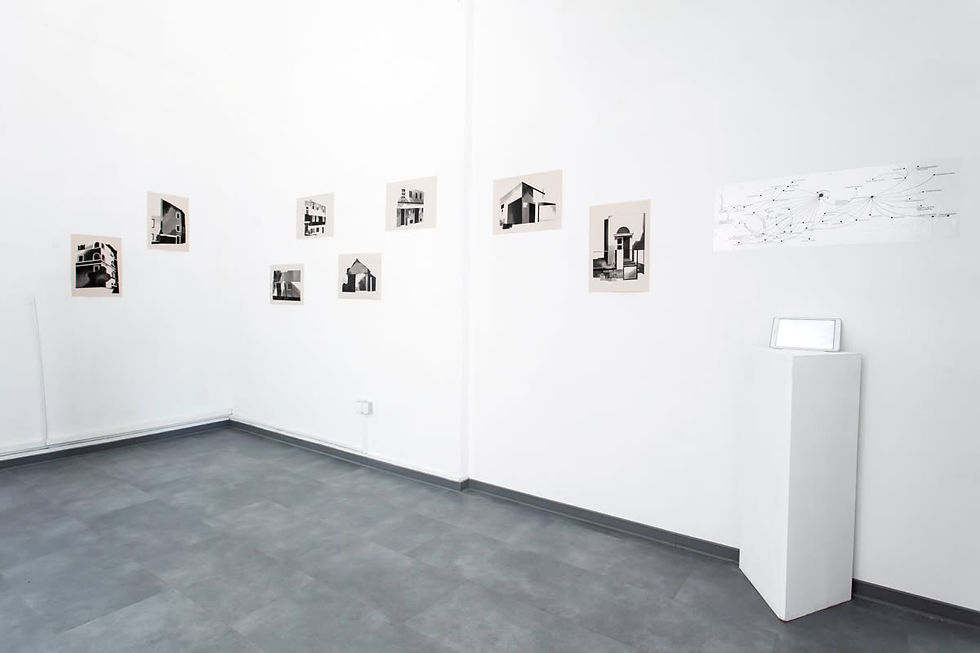

Cartographies of Deviations: Mapping Origins and Narratives
Curator: Rossana Mendes Fonesca
August 28th - September 20th 2024

When we speak of origins, home, or heritage, we are not merely referring to a fixed beginning. Instead, we are talking about crucial points from which our stories unfold, points to which we constantly return in the present we inhabit. Throughout our lives, we encounter multiple origins — points that hold answers to questions that often exceed our personal history or identity. These origins become a wellspring from which memories, déjà-vus, and images flow, forming a continuous yet fragmentary narrative that may not always be immediately decipherable but cultivates fertile ground for art. Cartographies of Deviations: Mapping Origins and Narratives revolves around the theme of deviations, exploring the concept of detours from our origins — our home, birthplace, family, or any foundational point in our lives. These origins are not merely beginnings; they are significant points of departure that shape our journey. And as we revisit these points, it is by remembering them, by reimagining them, that we shed light on our present. The exhibition presents a multiplicity of origins and, thus, different perspectives on deviations. The artworks presented in this exhibition, though varied in approach, share a common gesture of mapping memories through an anachronic process of invoking the past to illuminate the present. In each piece, the image becomes a living device of memory, guiding the artists back to these original points — whether it be a home, a house, a heritage, a household, or a genealogy. From there, they trace their own steps, sometimes overlapping with those of their ancestors, leading to childhood memories, local narratives, places marked by distress, and new life fictions. In the works of Glorija Lizde, Izzy Benigno, Lana Stojićević, Stela Mikulin and Tanja Minarik, there is a palpable desire to free the past from its historical rigidity, to rescue, fictionalize, and reimagine it. Whether through the computational fabrication of repressed memories, the creation of an interstitial space where childhood places intersect with sites of migration, the reconfiguration of paths once trodden by ancestors, or the reenactment of local narratives, these works navigate histories that are both collective and individual, past and present, familiar and foreign. Concepts like home, migration, heritage, and origin take on multiple meanings within each work, questioning contemporary understandings of our relationship with genetically inscribed memory and the massive, collective, and individual displacements of a globalized world. These seemingly innocuous relationships profoundly shape the conditions of possibility for our biographies. Glorija Lizde presents Untitled (Fearless youth). Three self-portraits taken from the Fearless Youth, a work-in-progress since 2020, in which she explores her family's past. The work is based on the eponymous, unpublished autobiography of her grandfather Hasan (1928–2011) in which he recalls, among other things, his experiences in Second World War. His upbringing in a Muslim village in Bosnia and Herzegovina (at the time Yugoslavia) was abruptly interrupted when he, following in the footsteps of his older brothers, joined the fascist Ustashe army in which he served from 1943 to 1945. His father witnessed the First World War, and his son, Glorija's father, was a soldier in the Yugoslav war. Like an unwanted family heirloom, the past is passed down from generation to generation, we are born into it and carry it even if we never witnessed it. Izzy Benigno presents Below the Ground, Only My Body Exists. Originating from Belém do Pará — a strategic point in the Portuguese colonization of the Amazon — the artist intersects her origins with her current home in Aveiro, where streets pay homage to this historic connection. Using 3D mapping, digital manipulation, and AI-generated images, she transforms her current environment by merging it with the myths of her homeland. Inspired by the tale of Cobra Grande, a giant serpent symbolizing the hidden force of nature beneath urban life, this piece reimagines the interplay between nature and urbanization. The serpent embodies both movement and stagnation, representing nature’s persistence in the city. Streets and paths become a hybrid of immigration and history — of what is, what was, and what might be. Lana Stojićević presents Pocket Real Estate, a piece that forms part of her artistic research into the spatial specificities of gender-connoted toys with architectural elements, such as Barbie Houses and Polly Pocket. These toys often contain incredible spatial solutions, breaking architectural norms and revealing unexpected or contradictory relationships between horizontal and vertical space, as well as between interiors and exteriors. Polly Pocket represents a radical miniaturization of architecture, a pocket real estate ‘on the go’, while Barbie houses are characterized by the term ‘dreamhouse’. Toys encourage the so-called pretend play, they become a trigger for imagination, substitutes for what is unattainable in reality. At the same time, they can represent a status symbol or objects of desire. Similarly, the pursuit of sustainable housing solutions remains an elusive dream for many residents, especially in touristic areas like Split, while real estate has become the toys of the wealthy, subject to the cruel games of a wild market. Stela Mikulin presents Archive of the Absent, a piece comprising an object book and video. This work documents the relationship between present and absent elements through the family house, yard, and garden. It examines objects, rooms, and corners captured by personal photographs and recognizes introspective sensibility through them. The need to preserve memory is carried out by the method of mnemonics, which connects data into wholes and gives them an easier-to-remember shape. The purpose of mnemonics is to memorize places that will be used to store information that we want to remember. Tanja Minarik presents I Think It’s a Group of People Flying Kites in the Rain, a digital visual installation. This work draws froma year-long archive of personal photographs, during which her memory of that period faded. Through the analysis of these auto-documentary photographs, the artist collaborated with machine learning algorithms to reinterpret these images and create new narratives. Computer vision tools, DenseCap and YOLO v8, analyzed and described the photos, which were then remixed in the Hydra environment to produce new visual compositions. By challenging subjects such as identity, migration, or belonging, this work seeks to bring out the complexities of coexistence between people, technology, and art, and how creation and research can intertwine to shape new narratives in a constantly evolving world, where different dimensions of reality meet and blend. The exhibition is organized with the financial support of the Ministry of Culture and Media of the Republic of Croatia. The exhibition is the result of a curatorial residency in Prostor financed through the Culture Moves Europe program. This work was produced with the financial assistance of the European Union. The views expressed herein can in no way be taken to reflect the official opinion of the European Union.


Ivana Tkalčić: Astronaut(S) Without a Spaceship: Catching the Wind
November 22nd - December 13th 2024

“Catching the Wind” is a new stage in Ivana Tkalčić’s artistic research entitled “Astronaut(s) without a Spaceship”, and it is a documentation of a performance performed in April and May 2024 during her residency in Finnmark, Norway. The works were produced for the exhibition in Prostor, where it is presented for the first time. Ivana’s approach in these works is - as in her previous works as well - experimental and playful, representing the processuality, fragility, but also the multidimensionality of artistic research and artistic work in general. The concept of the project “Astronaut(s) without a Spaceship” is related to space exploration, and here Ivana explores the motives and logic behind the current “space race” between nations and private companies and the potential ethical, political and ecological implications that the space race has on our planet and its resources. Ivana’s interest in space exploration began in 2019 when she came across a document on the establishment of the Center for Space and Innovative Technologies in her hometown, Sisak. As part of her initial reflection on this information, she performed several performances in the forest near the Sisak Steel Mill and Oil Refinery. This was followed by participation in the Analog Astronaut Training in 2022 in Poland where, by infiltrating among scientists, she recorded everyday events in controlled conditions, transforming a scientific experiment into an artistic one. In “Catching the Wind,” the artist focuses on the fragility of the Earth’s surface, exploring the connections between ecosystems and the human body. The work was realized in the Finnmark area during the Hyperborealis artist residency, in collaboration with Kvitbrakka AiR and Berlevåg Havnemuseum. Since she was staying near the Kjølnes lighthouse, where the wind research station is located, the research through performance focused on the element of wind. The performance documentation transforms the wind's motion into movements, bringing the principles that underlie how the wind behaves, by making the invisible forces of nature visible and tangible. This is the first step in testing — currently she is focusing on the development of a tactile "bodysuit" that explores natural elements through an immersive, tactile experience. The project relies on the theoretical frameworks of ecofeminism and postcolonial theory, which criticize exploitative interactions with the landscape and advocate for more respectful, sustainable practices. It emphasizes the importance of using Earth's resources by focusing on these qualities, and it aims to foster a more intuitive and empathetic approach to environmental stewardship. One of the research focuses is also the term terraforming (a hypothetical process of atmospheric, temperature, topographic, or ecological adaptation of a celestial body to the conditions of life on Earth) and its use when talking about planet Earth in relation to other heavenly bodies. There is a discussion about terraforming the Moon or Mars, but soon we will need to “terraform” Earth. In the past 10 years, space exploration and travelling have again become a big topic with many discussions, from statements like “we need to be multiplanet species” to asteroid mining. There is a noticeable increase in this space race, not only between nations but also between private companies. The artist therefore asks: What is the logic behind the new space race? For whom will this “new world” on Earth or some other astronomical body be built? How far can the exploitation of resources on and around Earth be stretched? Ivana Tkalčić (b. 1987) is a multimedia artist and art researcher. She obtained her master’s degree (mag.oec.) in economics in 2012 from the Faculty of Economics and Business at the University of Zagreb, as well as master’s degree (MA) in fine arts in 2016 from the Academy of Fine Arts Zagreb. In 2019/2020 she also graduated from WHW Akademija. She has exhibited independently a number of times in Croatia and Europe, and took part in group exhibitions and biennales worldwide. She has received numerous nominations and awards: Contemporary Art Collection – European Parliament, EU; ART OMI: ARCHIVE – collection, USA; 20th Radoslav Putar Award, Young Visual Artists Awards; HPB Grand Prix award at the 35th Youth Salon; Erste Fragments 12; The Rector’s Award for Student Excellence; RCAA - young European art award. She has participated in multiple residencies in Italy, The Netherlands, Belgium, Poland, Norway, Austria and Greece, such as: 2023 Art Omi: Artists Residency, Ghent, NY, USA; 2022 EMMPOL Poland, Analog Astronaut Training Center, Poland; 2021 EthicAI=LABS, Goethe-Institut; 2019 SciArt Project, The Joint Research Center, European Commission, Italy; 2018 Summer Session, V2_ Lab, Rotterdam, The Netherlands; 2017 NXT Residency, ELIA & Academy of Fine Arts Vienna, Vienna, Austria. A central aspect of my practice is the fluidity of the medium, which I see not as a rigid boundary but as a tool for realizing diverse ideas. Her process is akin to a playful investigation—an experimental method that leads to unexpected discoveries and new perspectives. This approach fosters collaboration with a range of experts, including scientists, curators, and institutions, to explore themes such as archives, databases, memories, and the boundaries between realities and identities. These explorations often stem from personal memories or collected objects, which I transform and reinterpret through speculative narratives. https://ivanatkalcic.com/ The exhibition was realized with the financial support of the Ministry of Culture and Media and the City of Split. The work of the “Culture Hub Croatia” platform is financially supported by the National Foundation for the Development of Civil Society and the Kultura Nova Foundation.


Andrea Resner & Jelena Vuković: Affiance
December 20th 2024 - January 24th 2025
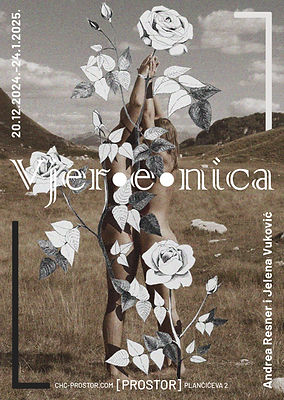
Affiance - an archaic English noun meaning “trust, faith, confidence,” and “marriage contract or promise”. The Croatian title Vjer•e•nica plays with the words „vjerenica“ which means fiancée (a woman engaged to be married) and „vjernica“ which means a woman who believes in God. Through this exhibition, Jelena Vuković and Andrea Resner intertwine their practices, which have many connecting points. Jelena explores the embodiment of feminine energy and the divine through movement and poetry. Andrea explores symbols, esotericism and feminine nature through drawing, animation, video and spatial installation. By connecting their experiences and practices, the artists have created an exhibition that thematizes the archetype of the affiance, and the ways in which this archetype is crucial for healing the rift between the spiritual and material worlds. Andrea Resner started working on the cycle presented here in 2015, with the work Tamed by a virgin, which touches on the theme and symbols related to the virgin archetype, and which will later be organically complemented and developed by the works created in 2024, in which the opening theme crystallizes in the idea of the affiance archetype, researching the meaning and role of Mary Magdalene. Affiance is inspired by the writings of Margaret Starbird, who, while investigating the person and concept of Mary Magdalene as a metaphor for the feminine principle that the official Church tried to erase, also investigates the ways in which these teachings were transmitted, most often through art, using various symbols attributed to her. According to this theory, it is Mary Magdalene who represents the female principle that enables wholeness and escapes us from the cultural environment trapped in the patriarchal modality. This is best shown through the third work, Magdalena, in which these two principles become one. Mary Magdalene is thus referred to as the Bride, who, unlike the Mother, is symbolized by the red color, and who is depicted with an animalistic tone in the central work, the very one she has often been discredited forin history. In this work, she intertwines and transitions into the figures of a woman who is sensual and liberated, and finally into the third character - a woman who opens her heart. Roses, as a symbol that has been running through Andrea's works so far, are now deliberately depicted without thorns - because removing thorns means openness and allowing others to approach (but is also a connection with the hidden church that used these symbols). Jelena's works, on the other hand, often refer to the initiation that a woman must go through within her psyche in order to get to the place where she surrenders. In her work Mandala, on Jelena's native mountain, beautiful Durmitor, artists Miloš Vujanović, Milena Cvetković and Vuko Martinović created a mandala in the form of land art. This mandala, which in the grass of Durmitor represents the edelweiss plant, for Jelena becomes a psychological labyrinth through which she walks, following the thread of the relationship with her father - the earthly one and the heavenly one, from love in trauma to love that is free. A spiral is a movement of a deep nature in us and in everything around us. It is the place where the invisible becomes visible and spirit - matter. Thus, in the work of Ada, Jelena drew a spiral on the Montenegrin Ada Bojana, and then placed her body on it, meditating and experiencing what it is like to be a spirit - which is also matter. Or, what is it like to be a body-soul in this world where we are taught to be torn between - either one or the other. What is the need of the body soul on earth? Community, tribe, contact, love. Spirit becomes Earth because of the touch. Therefore, this performance experiences the complete innocence of togetherness and imprints in the sand the inner desire to be natural, innocent, mentally naked - and not alone. Jelena brings Dragana and Marko, a young couple who have been married for seven years, to the mysterious valley of her Durmitor. After a long meditation on what it means to become an affiance, one who surrenders herself to a man, Jelena asks them a beautiful, innocent question: How dare you? (to choose each other, to trust, to let go, to live love) and instructs them to feel the answer to this question in their bodies and experience it through intuitive movement. Jelena stands to the side, in the role of an observer. She sees two people whose movements reveal that in fact nothing else but that union would be natural - neither in spirit nor in body. There, in a safe valley where she has always known only love, two young, healthy people walk towards each other and she witnesses how it is actually so natural that none of those reasons - why he/she wouldn't believe and why he/she shouldn't - lose their meaning. The red circle that is on their bellies is a vision that appeared in Jelena's psyche - according to which this performance was made in the outside world, in matter, ritually and artistically confirming that outside of trauma, then when we own ourselves and within ourselves find our own anchor, like Marko and Dragana say at the end of the performance, in the video How dare you?, the only thing that remains is the essence of our life on earth - love. In the mysterious valley of her Durmitor, Jelena brings Dragana and Marko, a young couple who have been married for seven years. After a long meditation on how to become a fiancee, one who surrenders to a man, Jelena asks them a wonderful, innocent question: How did you dare? (to choose each other, to believe, to let go, to live love) and instructs them to feel the answer to this question in their bodies and experience it through intuitive movement. Jelena stands to the side, in the role of an observer. She sees two people whose movements reveal that in fact nothing else but that union would be natural - neither in spirit nor in body. There, in a safe valley where she has always known only love, two young, healthy people walk towards each other and she witnesses how it is in fact so natural that none of those reasons - why wouldn't you believe and why shouldn't you - lose their meaning. The red circle on their bellies in the union is a vision that appeared in Jelena's psyche - according to which this performance was made in the external world, in matter, ritually and artistically confirming that outside of trauma, when we possess ourselves and our own anchor within ourselves, as Marko and Dragana do at the end of the performance, in the video How Did You Dare? and they say, the only thing that remains is the essence of our life on earth - love. Andrea Resner is a multimedia artist who works in the field of drawing, painting, photography, video, film, poetry, performance, costume design, spatial installation and street art. Through her work she explores the themes of dreams, poetics, femininity, mythology and symbols. Jelena Vuković is a poet, a mentor in the field of spirituality and sexuality, and a performance artist. Through all her works, she explores the relationship between spirit and matter. The exhibition is organized with the financial support of the Ministry of Culture and Media and the City of Split. The work of the “Culture Hub Croatia” platform is supported by the National Foundation for the Development of Civil Society and the Kultura Nova Foundation.


