EXHIBITIONS 2025
Goran Radošević: There Will Be No Winter
February 3rd - 15th 2025

They descend from Kamešnica mountain and chase away the winter. They pass through the sparse landscape and villages camouflaged in the karst, the same stone from which they are built. The grayness breaks the concrete or only a few white facades. Otherwise, we call this progress. The first sees them, the second hears them, and the third joins them in the dance. They often drink with them and eat pancetta, but it is most beautiful to watch them from a distance. It is easy to mistake them for a slender cypress when their silhouettes are outlined by the setting sun. With their hands hidden under colorful strips of cut clothes, they lift everything they can on a vertical sheepskin. They have been calling for spring since time immemorial, regardless of who rules over the land they call home. Balancing the sheepskin on their heads has become increasingly difficult lately because new things, values, and technologies are coming. The smell of sheep is less noticeable compared to the prominent smells, and spring is now guaranteed, despite the ever-increasing burden on heads, shoulders, and hips; hunger is heard less and less. For the last seventy years or so, they have been aided by strange devices that hum, smoke, and are as strong as a herd of oxen. There are also red bricks, concrete, and iron, which is now abundant. They have been calling for centuries, and their persistent dance seems to have paid off. They have brought an ever longer spring and there will be no more winter. The exhibition There Will Be No Winter presents a series of illustrations inspired by the tradition of Didi, which is still cherished today by people from the Dalmatian hinterland, specifically the areas around Sinj and Kamešnica. Didi are the heralds of spring - with dancing, ringing bells and long walks, they urge the retreat of winter, literally scaring away evil spirits. In a fictional, modernized version, Did becomes the herald of prosperity and newer, techno-centric times. Goran Radošević (1988, Split) is an illustration and 2D animation author . He completed undergraduate studies in Visual Communications at the Academy of Arts in Split (2012) and graduate studies in Animated Film and New Media at the Academy of Fine Arts in Zagreb (2016). He participated in numerous exhibitions, film festivals and projects in culture, and collaborated with a number of prominent clients in Croatia and abroad. He is a member of the Croatian Association of Fine Artists of Applied Arts (ULUPUH). Since 2019, he has been working as an external associate in the title of assistant at the Faculty of Civil Engineering, Architecture and Geodesy in Split. The exhibition is organized with the financial support of the Ministry of Culture and Media and the City of Split. The work of the “Culture Hub Croatia” platform is supported by the National Foundation for the Development of Civil Society and the Kultura Nova Foundation.


Vasylyna Buryanyk: Paid on Credit
February 21st - March 21st 2025

Over the 33 years of its existence, the Russian Federation has initiated 14 military conflicts, each of which has had a significant impact on the environment. These wars not only left millions of human casualties and destroyed infrastructure, but also delivered systematic blows to ecosystems, undermining collective ecological security. The Russian Federation has become one of the largest violators of international environmental law, using military equipment, chemical, and biological agents that devastate the environment and pose long-term health risks—not only during the conflict but also in the post-war period. As of early 2025, there is no legal document prohibiting such practices or ensuring accountability for environmental crimes. While the concept of "war crimes" has become part of international law, and mechanisms exist within the International Criminal Court (ICC) and the United Nations to address such crimes, the effectiveness of these mechanisms in the context of environmental damage remains limited. Vasylyna Buryanyk (1985) graduated in 2004 from the College of Arts Adalbert Erdely in Uzhhorod at the Department of Design and in 2010 at the National Academy of Arts in Lviv at the Department of Art Textiles. In her artistic practice and research, she deals with environmental and social issues in Ukraine and the rest of the world. In doing so, she uses transparent polyester fabrics that she shapes into changing kinetic installations. At the center of her experiments is textile, and by using its “softening” properties of this material, she talks about the open wounds on the body of reality. Working with mixed fibers, she refers to the relationship between man and nature, and through the meditative process of creating installations, she opens space and time for thinking about acute problems. She is the winner of numerous awards (2nd National Biennial of Young Art, 2019, Kharkiv; First Prize for Sculpture of Ukraine M17 Sculpture Prize, 2020, Kyiv; and 17th International Tapestry Triennial, 2022, Lodz); and has participated in residencies in Turkey, Ukraine, Germany, Poland, Slovakia and France. The exhibition is part of Prostor's yearly programme that is financially supported by the Ministry of Culture and Media of the Republic of Croatia. Vasylyna's stay in Split is funded by the Culture Moves Europe programme supported by Creative Europe and Goethe Institut.


Nourishment Ties
Curated by Sabina Oroshi
March 24th - April 14th 2025
.jpg)
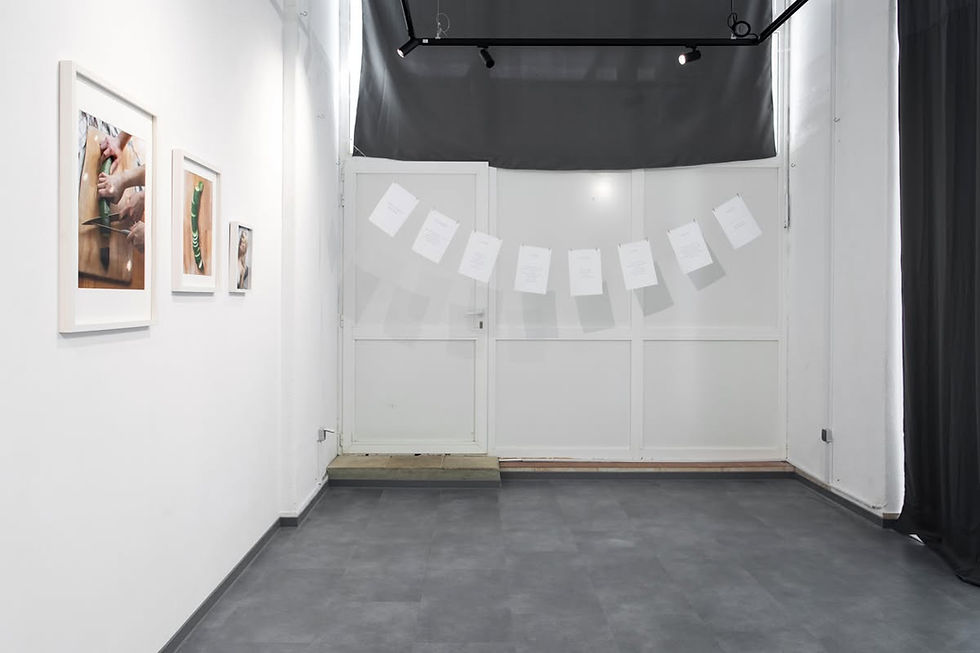
Nourishment Ties is an interdisciplinary project curated by Sabina Oroshi, independent curator and researcher, during her residency at Prostor. Nourshment Ties uses food and related practices as both a conceptual and physical medium to explore the intricate connections between ecological systems, human behaviour, and artistic expression. The project aims to engage audiences through participatory events that blend sensory experiences with medium exploration. PROGRAMME - Monday, March 31st 2025 [PROSTOR], 18:00h / Sabina Oroshi – Nourishment Ties | Curatorial Presentation of the Project The curatorial presentation will provide a deeper insight into the program, linking relationships between human and non-human worlds, and inviting the audience to reconsider their roles within these interdependent systems. About the curator: Sabina Oroshi is an independent curator and researcher dedicated to interdisciplinary and socially engaged artistic practices. She has curated exhibitions and projects across Europe, collaborating with institutions such as Kunsthalle Trier, Ircam Center Pompidou or Museum-Museo Lapidarium. Her curatorial work explores the themes of ecology, sound and transnational discourse. She gave lectures at the School of Visual Arts, Dutch Art Institute and Zeppelin University. Through international partnerships, new artistic productions and innovative exhibition formats, Oroshi is dedicated to expanding curatorial practice as a platform for critical reflection, accessibility and audience engagement in contemporary art. [PROSTOR], 19:00 / masharu – Eating Earth | Workshop Geophagy is the practice of consuming earth and earth-like substances, such as clay, chalk, and mineral soils. masharu will lead the Eating Earth workshop, inviting participants to explore the act of consuming earth. The workshop provides a sensory and educational experience while addressing questions such as: What is behind the tradition of earth eating? Where does edible earth come from? What are the potential benefits and risks? How do we, as humans, engage with our environment and with non-human beings? Note: Eating earth is not recommended by food and health institutions and is practiced solely at participants’ own risk. About the artist: masharu (they/them) lives and works in Amsterdam, describes themselves as a geophagist and earth enthusiast, and is the founder of the Museum of Edible Earth. Their projects combine scientific research with a personal approach and cultural practices. In 2011, they obtained a PhD in mathematics and graduated with honors from the Foto Academy in Amsterdam. From 2013 to 2014, they participated in the Art-in-Residency program at Rijksakademie van Beeldende Kunst in Amsterdam. Their artistic and scientific works have been presented in over 30 countries. masharu’s work is supported by the Mondriaan Fund. - Friday, April 4th 2025 / online, 19:30h Dora Ramljak – Quicksilver: Closed Circuit Currencies (2024) | Film Screening and Artist Talk (Online) This research is based on an ecological case study of fish in the Adriatic Sea, focusing on heavy metal contamination in fish tissues. The work compares fishing practices and environmental protection policies between Italy and Croatia to examine their impact on marine ecosystems. Heavy metals, which can trigger autoimmune reactions in both fish and humans, serve as indicators of migration patterns and ecological changes. The film explores the migration of both humans and marine species, ecological crises, and innovative bioremediation methods. About the artist: Dora Ramljak is a transdisciplinary designer and researcher working at the intersection of art, biology, and social practice. Initially trained as a photographer and designer, she studied at the Royal Academy of Art in The Hague. Her work investigates the role of art in questioning institutionalized systems of order, learning, and perception. With a focus on biopolitics, biomaterials, and environmental remediation, Ramljak’s practice integrates biology both as a medium and as a conceptual framework. She is currently expanding her research at the intersection of philosophy, immunology, and regenerative design. - Saturday, April 5th 2025 / VK Mornar, 12:00h Darko Brajković – Njapo – How to Explain Tourism to Mussels | Performance Inspired by Joseph Beuys’ How to Explain Art to a Dead Hare, this performance blends art, labor, and social critique to examine the exploitation of natural resources, the tourism economy, and overconsumption. Tourism, while economically essential, often accelerates environmental degradation, disrupts local traditions, and commodifies natural and cultural heritage. Through ritualistic movements and the gradual transformation of mussels the audience actively participates in the performance by cleaning the mussels, which are later prepared and consumed in a communal dining experience. In doing so, the work becomes a critique of invisible economic and ecological relationships, questioning the cost of tourism on fragile ecosystems, while also celebrating physical labor, local traditions, and human connection to the sea. The performance is followed by an artist talk that offers the audience the opportunity to deepen their understanding of the artistic concept the performance opens . Note: The consumption of mussels is at the sole responsibility of participants. About the artist: Darko Brajković Đepeto Njapo began working with visual arts in a stone-carving workshop in Pazin. He trained in the Siparis stone-carving workshop with Janez and Aleš Pirnat in Katoro, Umag, and participated in the work of the Umag-based Um-art gallery. In 2002, he took part in the multimedia project "Suvremenost 2002." and collaborated with multimedia artists Andrej Zbašnik and David Belas, as well as the CGI association. He has exhibited in numerous selected group and solo exhibitions and multimedia projects. He won the first prize at the 16th International Miniature Exhibition in Zaprešić. - Sunday, April 13th 2025 / [PROSTOR], 19h Tintin Patrone – Caprizaen (2024) | Film Screening and Performance The event includes a film screening and an interactive conversation with the robotic goat featured in the film. Caprizaen is a short dystopian mockumentary filmed on the Greek island of Samothrace, known for having more goats than humans. The film challenges the romanticized perception of rural life, portraying the tensions and conflicts within the rural community instead of an idyllic vision. It particularly examines the intersection of technology and society, as well as land-use issues. About the artist: Tintin Patrone (Christina Köhler) is a German-Filipino sound and performance artist whose work explores the intersections of music, art, sound, and experimental expression. By integrating robots and artificial intelligence into her work, Patrone challenges human subjectivity and physical presence. She founded the noise ensemble Krachkisten Orchestra (2009), initiated the International MusicMotorcycleClub, a mobile sound system event (2012), and created the performance collective The Ambassadors of Disappointment (2018) in collaboration with the Goethe Center in Guadalajara, Mexico. In 2021, she ran a fake Asian restaurant called German Rice, an experimental space blending music and food. Events are organized with the financial support of the Ministry of Culture and Media and the City of Split.


Lana Đurđek: Operational Planning
*in cooperation with the Office for Photography from Zagreb, which previously organized it at the SPOT Gallery in 2024.
May 27th - June 24th 2022

The Housewife is also a Manager or Supervisor If friends from another place arrive unexpectedly around noon or in the evening, the housewife will keep them for lunch or dinner. It may happen that these unannounced guests are not entirely welcome, because the housewife has tasks to attend to, but she must not show this—she must receive them graciously, as if she had invited them herself. Friends must never feel that they have come at an inconvenient time, because the housewife must always have time for them and be ready to serve them warmly in any way she can. The housewife demonstrates great capability if she manages to handle such surprise visits even when she is not in an ideal situation to serve guests, or when she must appear kind and smiling before them after having just experienced something upsetting." The well-known Croatian author Mira Vučetić (Ogulin, 1892 – Zagreb, 1976) wrote many Croatian manuals and cookbooks that were used for generations. The main goal of her books was to instruct housewives in the most efficient and practical ways to manage work within their own homes. Mira Vučetić’s books significantly eased the everyday lives of many housewives and introduced them to the many “unwritten rules” that every woman was expected to be aware of. Furthermore, through her publications, the author helped housewives recognize the need for and importance of organized work in the household. In my grandmother’s apartment, I came across the books Contemporary Nutrition and Cooking (1964) and The Big Cookery Book (reprint 2013), penned by Mira Vučetić. I studied their content and instructions, read about the duties and expectations of housewives, and how the role of the homemaker, traditionally attributed exclusively to women, is defined. By photographing myself in the role of a housewife, I imitate the activities and situations described in these books as everyday female duties, that is, the duties of a housewife. The photographs are an attempt to create a link between modernity, identity and gender roles. This work, imbued with humour, is intended to make the observer think about how unrealistic and extreme the responsibilities and expectations of a housewife were, and to what extent the gender roles and social norms have changed over time, and which ones still remain today. This project allows me to look at the changes that have taken place over the past few generations and to explore the different aspects possibly still in existence today. (Lana Đurđek) Lana Đurđek was born in 1999 in Zagreb, Croatia. She completed her secondary education in the Department of Photography at the School of Applied Arts and Design in Zagreb. She then enrolled in and completed a BA in New Media at the Academy of Fine Arts in Zagreb. In June last year, she graduated with an MFA in Photography from HDK-Valand in Gothenburg, Sweden. She has participated in various group and student exhibitions in Zagreb and Gothenburg and has held three solo exhibitions to date. Lana has been an active member of the Croatian Association of Visual Artists (HDLU) since 2021. Through the association, she took part in a one-month residency program titled De(construction) of the Image at Hafenkombinat in Leipzig, as well as a six-month residency at Cité Internationale des Arts in Paris, running until March 2025. The exhibition is organized with the financial support of the Ministry of Culture and Media, the City of Split and the City of Zagreb. The work of the “Culture Hub Croatia” platform is financially supported by the National Foundation for the Development of Civil Society and the Kultura Nova Foundation.


Jovan Josifovski: The Alibi Of The Lonely Sandwiches
May 28th - June 4th 2025

Jovan Josifovski is one of the finalists of Denes Award, which has been awarded to the best young Macedonian artists since 2002, and from 2024 one of the finalists of this award receives a one-month residency and opportunity to show their work through the exhibition in Prostor. In The Alibi of the Lonely Sandwiches, Josifovski confronts the absurd rituals of political spectacle in Serbia and North Macedonia, where something as mundane as a sandwich becomes a token of allegiance, a bribe wrapped in cellophane. Drawing from the mid 2010s populist tactics in Macedonia, revived in present-day Serbia, the exhibition transforms the sandwich into a satirical monument to political manipulation. These works serve as a critique of how power seduces the public with crumbs of comfort while masking deeper fractures in society. Through irony, repetition, and absurdity, Josifovski lays bare the hollow theatrics of control, questioning what we are really consuming, and what we are willing to trade for it. Jovan Josifovski is a Macedonian queer artist based in Skopje. His artistic practice and research delve into the vulnerabilities of queer life in the post-Yugoslav context, with a particular focus on the violence and complexities within families of queer children, examining the delicate and often strained parent-child relationship. His work critically addresses local politics, exploring the clash between the church, the state, and the anti-gender movement, and their effects on social dynamics and community life. Josifovski incorporates various media in his work, including installation, sculpture, textiles, drawing, collage, performance, video art, and text. He studied at the Faculty of Fine Arts in Skopje. Among his participation in group exhibitions and collaborative performances, most notably with Julie Tolentino at the Skopje Pride Weekend Festival, he has had four solo exhibitions, published two artistic books, and created one short film. Programme is supported by Ministry of Culture and Media of the Republic of Croatia, Kultura Nova Foundation and City of Split.


Milena Vukoslavović: Nigdine - kreč treperi
June 7th - 27th 2025

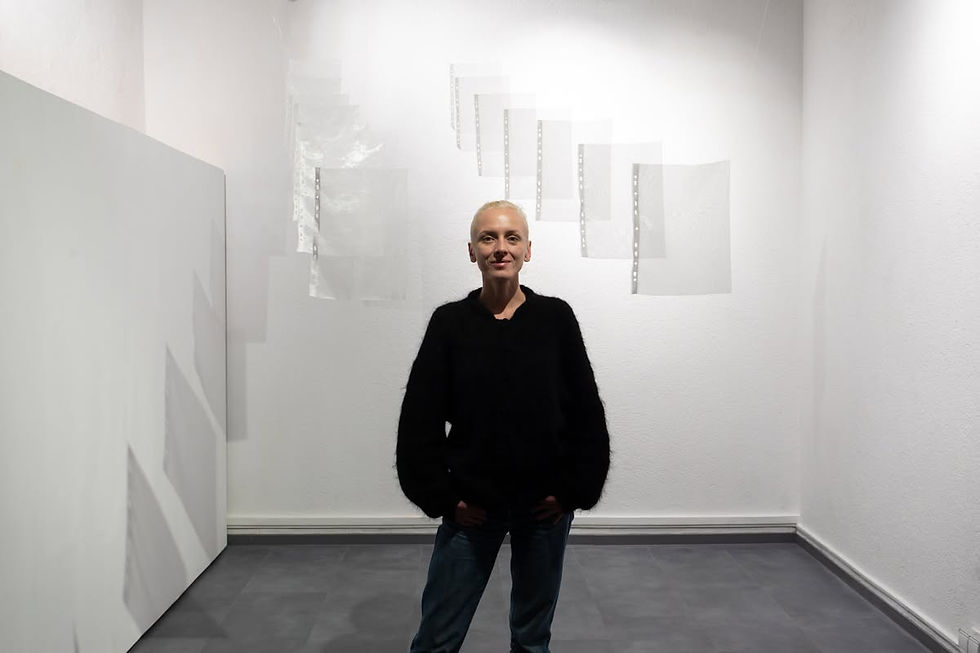
At the heart of Milena Vukoslavović's painting is the wonder of everyday spaces - those that are completely unimaginative, lifelike, and immediate. And although based on photographic observations, it would be wrong to say that Milena Vukoslavović's paintings are mere observations, because they are a meticulous depiction of each individual scene she encounters. However, it is not the case of pure photorealism - the painter’s aim, in her own words, is that the space of the painting remains sufficiently open and alive, rather than photographically clogged and frozen. From a technical point of view, this refers to the gradual construction of light, the definition of spatial relationships, and gradual materialization, without engaging in excessive description. It is not a case of a passive relationship between the artist and the motif, but the one where the artist and the scene interact, resulting in a completely personal approach based on mere fascination, without the intervention of critical or engaged thought. In most cases, these are completely unimportant, incidental locations - places without identity or specific significance, a sort of non-places. In his theory of supermodernity, Marc Augé introduces the concept of non-place as a referential determinant of the interpretation of contemporaneity. Our lives are being very much shaped by these spaces in which we spend time on an everyday basis. Those are often spaces with no meaning, spaces that we have no real connection to. For him, non-place is regarded as anthropological space. He discusses “spaces in which neither identity, nor relations, nor history really make any sense; spaces in which solitude is experienced as an overburdening or emptying of individuality, in which only the movement of the fleeting images enables the observer to hypothesize the existence of a past and glimpse the possibility of a future.” (Augé, Marc, Non-places:Introduction to an Anthropology of Supermodernity, London, Verso, 2008.,) Anxiety is often present there, as one of the modes in which our relationship with these spaces is built upon. As an antidote to this, with her paintings Milena brings a new atmosphere, which instead of anxiety or pathos, evokes tranquility and melancholy. Often, contacts of the private and the public are visible - subtly emphasized echoes of the tresspassing of the private into the public space, thereby creating different dynamics of this relationship. The absence of a human figure in Milena Vukoslavović's paintings does not erase the human component contained in them. In fact, this very absence confirms its existence - these are the motifs in which human traces are outlined. And, although devoid of narration - the scenes hint at its fragments. They just as easily function as the starting (or, rather, ending) point of a potential movie scene. Milena thus leaves open the possibility of developing the story for those who want to engage in it, but reminds us that the moment of observation is crucial and it is now and here. ___ Milena Vukoslavović (1990, Bar) lives and works in Podgorica. She completed her studies in graphics at the Faculty of Fine Arts in Cetinje in 2013. She is involved in drawing, painting, mural painting and illustration. She has exhibited in several group exhibitions in the country and abroad. She exhibited her paintings independently in the space of the CZ "Ribnica" in Podgorica, at the exhibition "Field Notes" (together with Srđa Dragović) in 2021, and at the exhibition "More Pictures from Today's Walk" at the Modern Gallery - Museums and Galleries of Podgorica, (also with Srđa Dragović) in 2022. The same exhibition was shown in Belgrade, at the Studentski Grad Cultural Center in 2023. She has exhibited collectively in several group exhibitions and salons. As a visual artist, she was engaged in the international project "They Live - Student Lives Discovered Through Contextual Art Practices" (2022), managed by the Studentski Grad Cultural Center in Belgrade, and organized by the Institute for Contemporary Art. She was a resident at the Salzamt studio in Linz in 2023. The exhibition is supported by the Ministry of Culture and Media of the Republic of Croatia, Ministry of Culture and Media of the Republic of Montenegro and the City of Split. The work of the Platform "Culture Hub Croatia" is supported by the National Foundation for the Development of Civil Society and the Kultura nova Foundation.


Milica Denković: Dysmenorrhea Diaries
July 5th - August 1st 2025
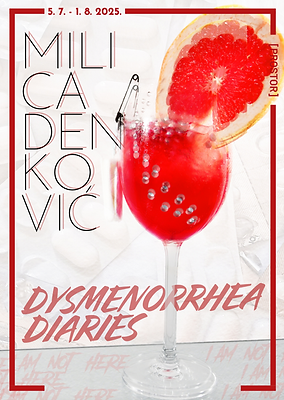
Pain always has a specific language, whether it is a cry, a sob, or a tensing of the features, and it is a language in itself as well.” (1) Interested in the phenomenology of menstrual pain and inspired by her own experience of living with chronic pain, Milica Denković develops the project “Dysmenorrhea Diaries”, with which she questions the understanding of pain as a personalized, immeasurable and unshareable experience, but also pain as a female heritage. The exhibition consists of three interconnected parts, the first of which presents a series of installations composed of various, often piled up, objects, that together form the bedroom. The installation is dominated by the color red - the color of pain, but also of strength. It is an intentional choice made by a member of the generation that grew up with advertisements for sanitary pads with blue liquid. Where does this fear of the color red come from? And while some minimal progress is visible in this regard, menstruation is, in general, still a taboo, and the pain associated with it is too often denied, ignored or neglected. Menstrual pain here also serves as a metaphor for the illnesses that affect women, and the way they are diagnosed and treated. In addition to the fact that medical research is largely based on men, the healthcare providers and the healthcare system are failing women in their responses to and treatment of women’s pain, especially chronic pain. Women are more likely to be offered minor tranquilizers and antidepressants than analgesic pain medication. Women are less likely to be referred for further diagnostic investigations than men are. And women’s pain is much more likely to be seen as having an emotional or a psychological cause, rather than a bodily or biological one. Women are the predominant sufferers of chronic diseases that begin with pain. But before our pain is taken seriously as a symptom of a possible disease, it first has to be validated — and believed—by a medical professional. And this pervasive aura of distrust around women’s accounts of their pain has been enfolded into medical attitudes over centuries. Prevailing social stereotypes about the way women experience, express, and tolerate pain are not modern phenomena — they have been ingrained across medicine’s history. Our contemporary biomedical knowledge is stained with the residue of old stories, fallacies, assumptions, and myths. (2) Milica Denković translates her own experience of dysmenorrhea and chronic colitis into poetry as a way of coping with pain, or channeling it. The installations are therefore created with the idea of how to objectify poetry. There are four poems in the “room”, each of which is linked to a specific object(s). Menarche talks about the first menstruation and the discovery of the pain. Since she got her period when she was 11 (at the same age that she began writing poetry), she presents this poem in an installation that depicts a kid’s birthday as a symbol of the transition from childhood to adulthood. The red dress as the central object embodies the poem of the same title, which objectifies pain through a red dress tailored for an eleven-year-old girl and the feeling of discomfort that it represents for the artist today, being an adult woman. It also symbolizes the concept of masking pain in public, and raises questions about the fashion and comfort of clothing for women and people who experience severe pain. The short poem Avalanche describes the experience of severe menstrual pain that can last for several hours. This pain is represented as a mountain of pillows, accompanied with sheets, blankets, pain management devices, and a wall clock. There is also a notebook and a pencil, symbols of the artist’s use of writing poetry as a pain management technique. Finally, the short poem Recipe hidden in the nightstand speaks of poetry as a painkiller and the time needed to write it, which is actually time spent in pain. It is represented with the nightstand, painkillers, tea, common everyday products that she uses to relieve nausea and pain. Each of these installations calls for micro-interaction, with messages resembling Alice in Wonderland’s instructions for navigating the strange world she entered, which adds the playfulness to this scenography as a whole. All of them together represent the room as a space in which pain is experienced, where we allow it to be felt, or where it is hidden within four walls. The counterpart to poetry installation is a series of photographs on the topic of PMS and food cravings. The photographs, intentionally highly aestheticized, represent various cocktails into which the artist translates pain, but also the cravings for certain drinks and foods, or pleasure, as a counterbalance to pain. Elaine Scarry, in her scientific monograph “The Body of Pain”, argues that the experience of pain is unsharable because it is a private, subjective event that does not simply resist language, but actively destroys it. (3) However, Milica Denković not only talks about pain by successfully mixing various artistic forms, she also encourages others to share their own experiences. Therefore, in the last, participatory part of the exhibition, the artist invites visitors to summarize their experience or knowledge about menstruation or severe pain and to write it on a shower curtain with invisible UV markers. The text becomes visible only when the UV lamp is turned on. This work, called “Under the Surface”, embodies the silence and the unspoken in the public discourse about menstruation and menstrual pain. - Jasmina Šarić (1) Roselyn Rey, The History of Pain. Paris: Palais de la Decouverte, 1993. (2) Adapted from Unwell Women by Elinor Cleghorn (2021) and article Gender Medicine History (3) Scarry E., The Body in Pain: The Making and Unmaking of the World. Oxford: Oxford University Press, 1987. Milica Denković completed her Master's degree in New Visual Media at the Academy of Arts in Novi Sad. From 2018 to 2022, she collaborated with the Swedish cultural organization Kultivera as an independent artist on the international art project Letters, experimental art workshops and exhibitions. She is also active as a poet. Her poetic video work Astronaut/2x2m was shown in 2021/2022 at more than 25 video and short film festivals around the world. Her poetry is included on the LP “Poezija je mrtva” by the international punk'n'poetry band Unbearable error. She is a member of the informal Rijeka poetry collective Poetkult and the Croatian Association of Interdisciplinary Artists. The exhibition is organized with the financial support of the Ministry of Culture and Media of the Republic of Croatia and the City of Split. The work of the Platform "Culture Hub Croatia" is supported by the National Foundation for the Development of Civil Society and the Kultura Nova Foundation.


Clara Diab & Mads Christoffersen: Riding the Blue Wave
An exhibition on flow and undertow
August 8th - 18th 2025
POTEZ22 is an exhibition of works by students of the 1st year of the Graduate Study of Architecture and Urbanism as part of the course Studio 2. The architectural workshop Graduate Studio 2 (DS2) - 2022 was realized through an extensive urban - architectural research on the stretch of Zrinsko - Frankopanska street in Split, which includes the complexes: 'Stari plac' (STUDIO 3), cassette 'Spinut' (STUDIO 6), HBZ Square (STUDIO 4), Poljud complex (STUDIO 6), park 'Turska kula' (STUDIO 1) and 'BRODOSPLIT' (STUDIO 2). POTEZ22 is based on four basic principles: - integrity, because it presupposes a comprehensive assessment of the needs and possibilities of the city and especially of the part of the city in which it is realized, thus overcoming the fragmentary nature of detailed plans, - defined period of time and in a way that, through elaboration and visual presentation, additionally motivates urban actors and attracts investors - partners,- feasibility and presentability, because it plans and coordinates the interventions that are carried out in - flexibility and sustainability, because by assessing the impact of the intervention, it assesses its sustainability in relation to the overall urban context, and already in the programming phase determines solid and immutable elements, as well as those elements that can be changed in the elaboration and negotiation phases or after additional analyses, - participation of all urban actors, transparent procedure and reconciliation of public and private interests (public-private partnership).


Mihael Frančić & Manuela Pauk: Energy Reservoirs
September 2nd - 26th 2025

The exhibition Energy Reservoirs presents and connects the works of Mihael Frančić Empire and Manuela Pauk Hecate’s Deposits into a new whole that tells the story of the driving and destructive energy of nature - but also that of society; its sources, (in)exhaustibility, cycles and transformations that arise in the process. Frančić’s work, created from organic material - coffee - refers to changes in the urban fabric that occurred under the influence of megalomaniac impulses, and is a continuation of his practice of questioning capitalism and its impact on our lives. It is an installation that was created for almost two years (2022-2024), including in Prostor, and was first presented in 2024 in the gallery Kvart in Split. The work was later exhibited again, and its deinstallations and reinstallations left their mark on the fragile material. Therefore, this exhibition is partly also a story about the life of artistic work - its circularity, disintegration and new life, the potential for further deconstruction during the duration of the exhibition, as well as its recontextualization in relation to other works with which it comes into communication. Experimenting with coffee as a building material, but also its meaning for humans as a source of energy and the role of productivity fuel, especially in the context of today's capitalist system, Frančić builds his Empire (which, symbolically, rises and falls), creating almost apocalyptic visions of some kind of isolated urban area and creating an ambience aftermath. The installation is invaded by the elements of Manuela Pauk's work Hecate's Deposits, produced for this exhibition and inspired by the energy forces that move the world. Referring to Hecate, the Greek goddess of the underworld, these works speak to the energy that drives the world, from the geological depths to the surface; about transitions and transformations, conflicts and calms, about life and death that are constantly intertwined. According to ancient mythology, Zeus granted Hecate dominion over the land, sea and underworld, and she was known for drawing her strength from within herself, not depending on anyone or submitting to anyone, not even Zeus. She is often associated with the symbolism of the crossroads, as a signifier of life and energy transitions. Opposing the intended organization, uniformity and order of Frančić's sculptures, Manuela's works spark with playfulness and unbridled energy, thus contrasting the mythological and divine with man-made and the apparent control of the human. At the same time solid and fragile, they are placed in such a way that the visitors circulate among them with caution, following the paths in the gallery space through which the works guide them. Placed in this way within the exhibition, the works of the two artists communicate with each other, complement each other and together create a new story, without answering the question of what happened or what is yet to happen, but opening up to the numerous possible scenarios. Mihael Frančić (1998, Split) graduated from the School of Fine Arts in Split in 2017 and in 2023 obtained an MA at the Department of Painting at the Academy of Arts in Split, in the class of professors Viktor Popović and Neli Ružić. He has presented his work in several solo exhibitions - Premieres 77 at Loggia / Center for Culture and Lifelong Learning Zlatna vrata in Split (2020), and ''De-Generation'' at the Gallery Škola in Split (2022), ''Beheading'' at the Club Zona in Split (2022), four exhibitions entitled ''Ennui'' at the Galum, Kortil, Šira and Waldinger galleries in 2022 and 2023 and ''Empire'' at the KVART gallery in Split, in 2024. He participated in the student group exhibitions Novi Horizonti in Ružić Gallery, Slavonski Brod, in 2020, in the 4th International Student Biennale Greatest Hits, MKC Split, in the group exhibition Work, text, context (because error is part of consciousness) in Milesi Palace, Split and in SC Gallery, Zagreb, in the student exhibition "Southwest-Northeast" in the Kuva / Tila gallery at the Academy of Arts in Helsinki, Finland and in the group exhibition "SA-STA-VI, NA-STA-VI, RA-STA-VI" in the Art Gallery Split. Manuela Pauk (Zagreb, 1994; grew up in Šibenik) graduated in sculpture at the Academy of Fine Arts in Zagreb (2018) in the class of prof. Peruško Bogdanić. In his work, she explores the relationship between civilization and nature through spatial installations and sculptures. She exhibited at numerous solo and group exhibitions. Among the most notable are: Y–Z Construction Site of the New Generation (NMMU, Zagreb, 2025), Glowing Globe: Anthropocene Art (Kortil Gallery, Rijeka, 2025), About Stories and Things – Golden Watermelon (Metamedij / MSUI, Pula, 2024), Situation – Youth Salon (HDLU / Archaeological Museum, Zagreb), Sculpture Triennial (HIS, Zagreb), Ceramics Biennial (Aveiro, Portugal), 90 Days Lockdown (Luxelakes Gallery, Chengdu, China), 40th Split Salon (2018). She was a finalist for the Golden Watermelon Award (2022, 2024) and the 40th Split Salon. Her works are in the collections of the City of Aveiro (Portugal) and the Croatian Museum of Natural History (Zagreb). **As part of the exhibition, Manuela's work Monument Along the Road is also presented, initially during the exhibition opening in front of Prostor’s entrance, and then in its coworking section. Curator: Jasmina Šarić / Assistant: Željka Ivančić / Technical setup: Marin Renić / photos: Glorija Lizde The exhibition was organized with the financial support of the Ministry of Culture and Media of the Republic of Croatia and the City of Split. The work of the Platform "Culture Hub Croatia" is supported by the National Foundation for the Development of Civil Society and the Kultura Nova Foundation.


Camilo Londoño Hernández: On This Body
qEXHIBITIONS @ PROSTOR
October 20th - 31st 2025

To invoke the experiences of inhabiting cruising bars and gay saunas in Medellin, Colombia, Camilo Londoño Hernández decided to scan himself. Using the double meaning of dark room, he overlaps photography and literature to portray his sexuality as a cuir (queer) person living with HIV. He brushes his skin with light and words to grasp the traces of pleasure, love, desire, and loneliness. Without binding, the pages of this book presents the body itself for everyone in an exercise of poetic montage in the PROSTOR Gallery space. As a result, the artwork becomes a fragmented photo poem, a dark box, and a book installation. It appears as an intimate and visual text where a queer gaze transits toward the public and avoids order or chronology. Here, Camilo explores the fear of being touched and transforms it into the desire for touch. CAMILO LONDOÑO HERNÁNDEZ is a Colombian cuir (queer) writer, visual artist, and independent curator based in Germany. As a constant game of moving words and images, his work plays with the borders of literature to open cracks of affection, sexuality, pleasures, and power. Among the intersections of writing with cinema, photography, and performance, the artist portrays personal stories seeking fractures inside patriarchal discourses. For the last few years, living with HIV has shifted his art practice to reflect on the tensions of body, language, and space. Hence, through methodologies and mediums of reproduction and rearrangement, the artist creates textual and viral publications such as artbooks, performative readings, films, short stories, visual essays, and poems. His expanded literature wonders about viruses as metaphors, cities as organisms, streets as stories, poetics of daily life, and the motions of intimacy and grief. Camilo Londoño Hernández graduated with a master’s in fine arts in Public Art and New Artistic Strategies at the Bauhaus Universität- Weimar (Germany). qEXHIBITIONS are a program line of the queerANarchive collective, which is realized with the financial support of the Ministry of Culture and Media and the City of Split. The work of the collective is financially supported by the Kultura Nova Foundation. This exhibition is the result of the collaboration between the queerANarchive collective and Culture Hub Croatia - PROSTOR.


SHAPED SHAPES
December 19th 2025 - January 23rd 2026
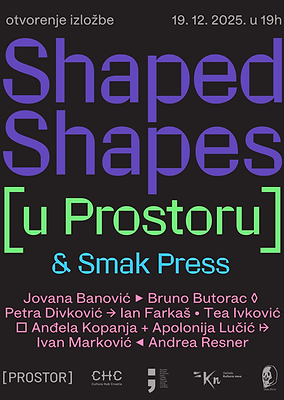
Artists: Jovana Banović, Bruno Butorac, Petra Divković, Ian Farkaš, Tea Ivković, Anđela Kopanja, Apolonija Lučić, Ivan Marković, Andrea Resner The new edition of the Shaped Shapes exhibition opens for the first time in Split: Shaped Shapes is the result of an initiative that first took place in the form of a pop-up exhibition in 2022 in the Siva gallery in Zagreb, when Nikica Jurković, Mario Miličić, Damir Sobota and Josipa Tadić presented their works of art. Although it was not initially conceived as a thematic group exhibition, the authors who gathered on their own initiative with the aim of presenting new works had in common that they deal with the transformation of form in their work, which is where the name of the exhibition comes from. After the first exhibition, the concept continues to develop and expand, and in the last three years, numerous artists have participated in exhibitions at the Siva Gallery through an open call, and through an open call announced in August of this year, the following authors were selected for the exhibition in Split: Jovana Banović, Bruno Butorac, Petra Divković, Ian Farkaš, Tea Ivković, Anđela Kopanja, Apolonija Lučić, Ivan Marković, Andrea Resner, whose new works were produced in collaboration with Smak Press. The exhibition organizers are Tena Bakšaj, Mario Miličić and Josipa Tadić in collaboration with the “Culture Hub Croatia”. Exhibition production: “Culture Hub Croatia” and Smak Press The exhibition was co-financed by the Ministry of Culture and Media and the City of Split. The work of the Platform "Culture Hub Croatia" is supported by the Kultura nova Foundation and the National Foundation for the Development of Civil Society.


